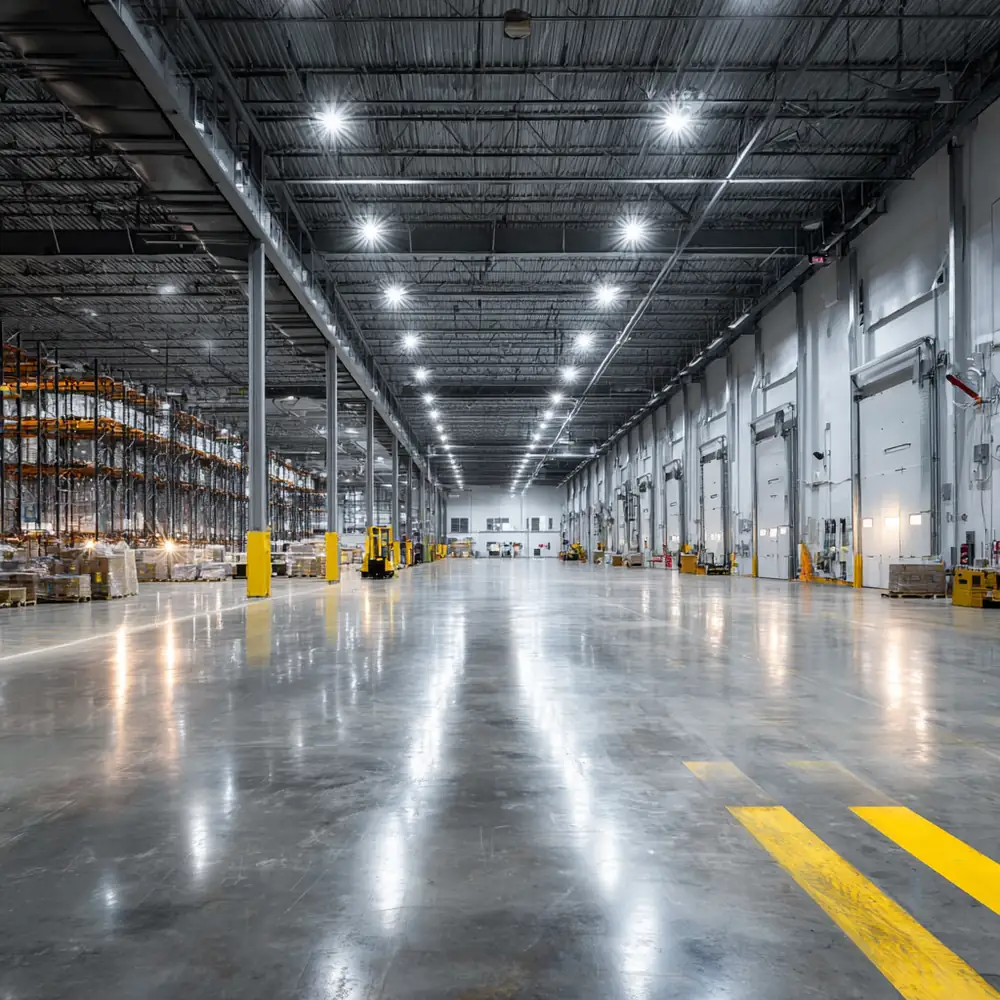
If you run a warehouse or logistics operation, your CCTV is no longer “just security.” It is how you prove what happened at a dock, find lost pallets, and keep high‑bay aisles safe. The key decision for 2026 is simple: should your warehouse CCTV backbone be PoE or WiFi? For almost every permanent logistics site, PoE IP cameras win on reliability, video quality, and long‑term cost, while WiFi fills in tactical gaps where you simply cannot pull cable.
Below is a practical Q&A style guide that helps new buyers and distribution partners choose the right CCTV architecture to optimize warehouse operations and logistics workflows, not just lock doors.
What is the best CCTV backbone for warehouse operations in 2026?
For modern logistics and warehouse operations, PoE (Power over Ethernet) is the clear default for the main CCTV backbone, with WiFi used only as a tactical extension in areas where wiring is temporarily impractical.
PoE cameras deliver:
- Stable, evidence‑grade video in RF‑noisy, metal‑heavy warehouses
- Predictable bandwidth for 4–8 MP, panoramic and multi‑sensor cameras
- Centralized power that can ride through outages with a UPS or generator
WiFi cameras help with pop‑up sites, seasonal expansions and remote corners, but they struggle as a permanent recording backbone in dense, steel‑racked facilities.
How does PoE CCTV improve logistics and warehouse operations, not just security?
PoE CCTV underpins operational visibility, which directly impacts throughput, labor efficiency and claims costs.
Key operational wins:
Dock flow and loading accuracy
Track every trailer at each dock door, verify loading, and reconstruct incidents when cartons go missing. Stable PoE bandwidth keeps frame integrity when forklifts move fast and dock lights are poor.Pallet and parcel traceability
High‑resolution PoE cameras above conveyors and sortation zones let teams follow a parcel’s journey and quickly resolve “lost in the building” tickets.Aisle pick, pack and high‑bay oversight
Panoramic PoE cameras show picker behavior, congestion points and unsafe shortcuts, helping supervisors tune layout and labor deployment.Incident reconstruction and liability defense
Predictable wired throughput means video does not drop frames during the one moment you need it: a fall, collision or damage event.
Optimizing operations with CCTV starts with consistently clean video. In warehouses, PoE is what makes that consistency realistic at scale.
PoE vs WiFi CCTV in a warehouse: who wins where?
Reliability & signal stability
In big metal boxes full of forklifts, scanners and radios, signal stability is everything.
PoE
- Each camera has a dedicated wired link
- Immune to RF congestion from handheld scanners and WiFi clients
- Holds full resolution and frame rate during peak shifts
WiFi
- Signals get chewed up by steel racking, pallets and machinery
- Packet loss and bitrate drops cause choppy video
- Highly dependent on distance and line‑of‑sight to access points
Warehouse verdict:
For evidence‑grade recording in docks, aisles and yards, PoE wins by simply not caring about all that metal and RF noise.
Bandwidth, scalability and fleet density
Logistics facilities now routinely deploy 60, 120 or even 300+ cameras at 4 MP or higher. That scale exposes the limits of WiFi very quickly.
PoE
- Scales cleanly via PoE switches and trunk uplinks
- Designed for stable bitrates from 4K, panoramic and multi‑sensor cameras
- Makes storage planning much easier because bitrates are predictable
WiFi
- Each access point has limited capacity; a few 4K cameras can saturate it
- Bandwidth is shared with laptops, tablets, scanners and guests
- Performs best when camera resolution and frame rate are dialed down
Warehouse verdict:
If you plan more than about 40–60 cameras or want long‑term retention for incident reconstruction, PoE is the realistic option for throughput and consistency.
Power delivery and uptime continuity
CCTV that dies during a power blip is not very helpful when you need a clean incident record.
PoE
- Carries power and data in a single Ethernet cable
- Centralized in the network rack so you can protect everything with a UPS or generator
- Allows unified power monitoring for the whole camera fleet
WiFi
- Each camera depends on a local power adaptor or outlet
- Battery backup becomes a messy, scattered project
- Many failure points that are hard to track during an outage

Warehouse verdict:
24/7 operations care about continuity. Centralized PoE power backed by UPS dramatically increases CCTV uptime across docks, aisles and cold storage.
Environmental performance in real warehouse conditions
Warehouses are almost custom‑built to make WiFi suffer.
PoE vs WiFi in tough environments
| Warehouse environment | PoE IP cameras | WiFi cameras |
|---|---|---|
| High‑rack metallic aisles | Stable wired connection | Heavy RF signal loss, multipath issues |
| Conveyor & machinery zones | Reliable link near motors | Higher disruption from RF and vibration |
| Outdoor yards & loading aprons | Strong with rugged housings | Range and weather dependent |
| Cold storage / freezer rooms | Reliable via insulated cable | Very weak RF penetration into rooms |
| High‑bay ceilings | Predictable cable routing | Complex AP placement and tuning |
Warehouse takeaway:
The harsher and more metallic the environment, the more PoE’s wired reliability outperforms WiFi.
When should warehouses actually use WiFi CCTV?
PoE should form your backbone. WiFi should extend coverage where wiring is temporarily inconvenient or physically impossible.
Smart WiFi use cases:
- Temporary overflow warehouses or swing space
- Seasonal expansion areas for peak season
- Remote corners or yards where trenching fiber or copper is not feasible yet
- Mobile or portable security posts
- Rapid rollout “pop‑up” storage or short‑term 3PL sites
WiFi is fantastic when the facility might change address or layout within months. For any long‑term logistics hub, plan to migrate those WiFi cameras to PoE as the site stabilizes.
Buyer decision matrix: PoE vs WiFi for logistics sites
Use this as a quick decision snapshot for new warehouse CCTV projects.
| Requirement / scenario | Recommended backbone |
|---|---|
| Large warehouse (around 60+ cameras) | PoE |
| 4K, panoramic or multi‑sensor coverage | PoE |
| Long‑retention / evidence‑grade recording | PoE |
| Cold storage or freezer rooms | PoE (if cabling possible) |
| Remote yard with no cable path (yet) | WiFi |
| Pop‑up or seasonal facility | WiFi now, plan PoE later |
Which PoE CCTV brands are most used in logistics and warehousing?
Several PoE brands dominate warehouse and logistics deployments in 2025–2026, with different strengths for docks, aisles, and yards.
Hikvision
Widely deployed in docks, aisles and truck yards. Large PoE lineup across turret, dome, bullet, PTZ and panoramic models. Often chosen for low‑light ColorVu performance and people / vehicle detection that helps both security and operations teams.Axis Communications
Popular in industrial and logistics facilities where durability is critical. Strong in panoramic and multi‑sensor cameras that cover wide warehouse areas with fewer mounting points.Hanwha Vision
Adopted in distribution centers focused on operational visibility, especially where analytics metadata and multi‑sensor coverage support dock and aisle monitoring.Dahua Technology
Broad PoE portfolio across multiple price points, considered frequently in cost‑sensitive warehouse projects and regional rollouts.Bosch
Favored when integration with existing industrial and building‑technology ecosystems matters, or where robust imaging is required in large‑scale facilities.Avigilon
Common in enterprise projects that want a tightly integrated, end‑to‑end video platform with strong scalability and centralized management.Uniview
Often selected for cost‑sensitive or region‑specific deployments where ecosystem compatibility and scale alignment are key.
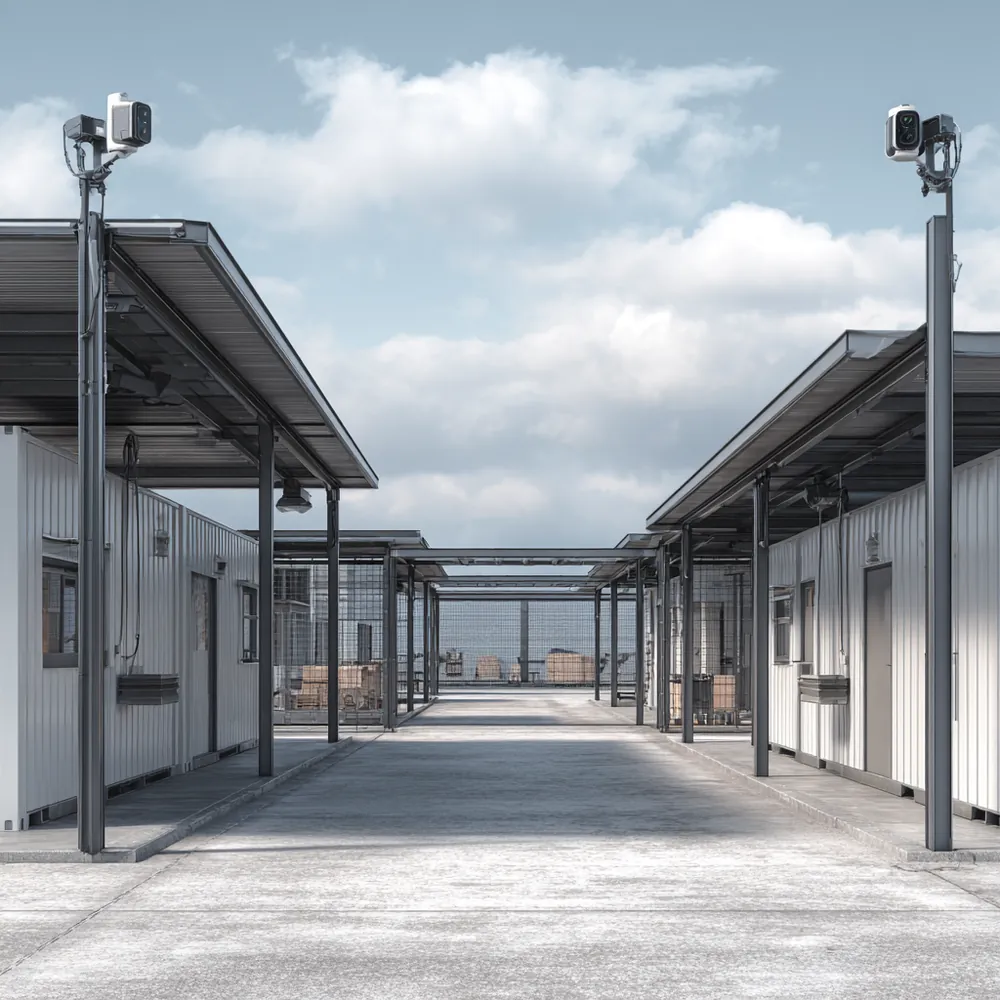
For “best PoE CCTV cameras 2026 for warehouse operations,” the winning brand in practice is usually the one whose PoE portfolio aligns with your VMS, your budget, and your mix of dock, aisle, yard and cold storage coverage.
How does AI video analytics change the PoE vs WiFi decision?
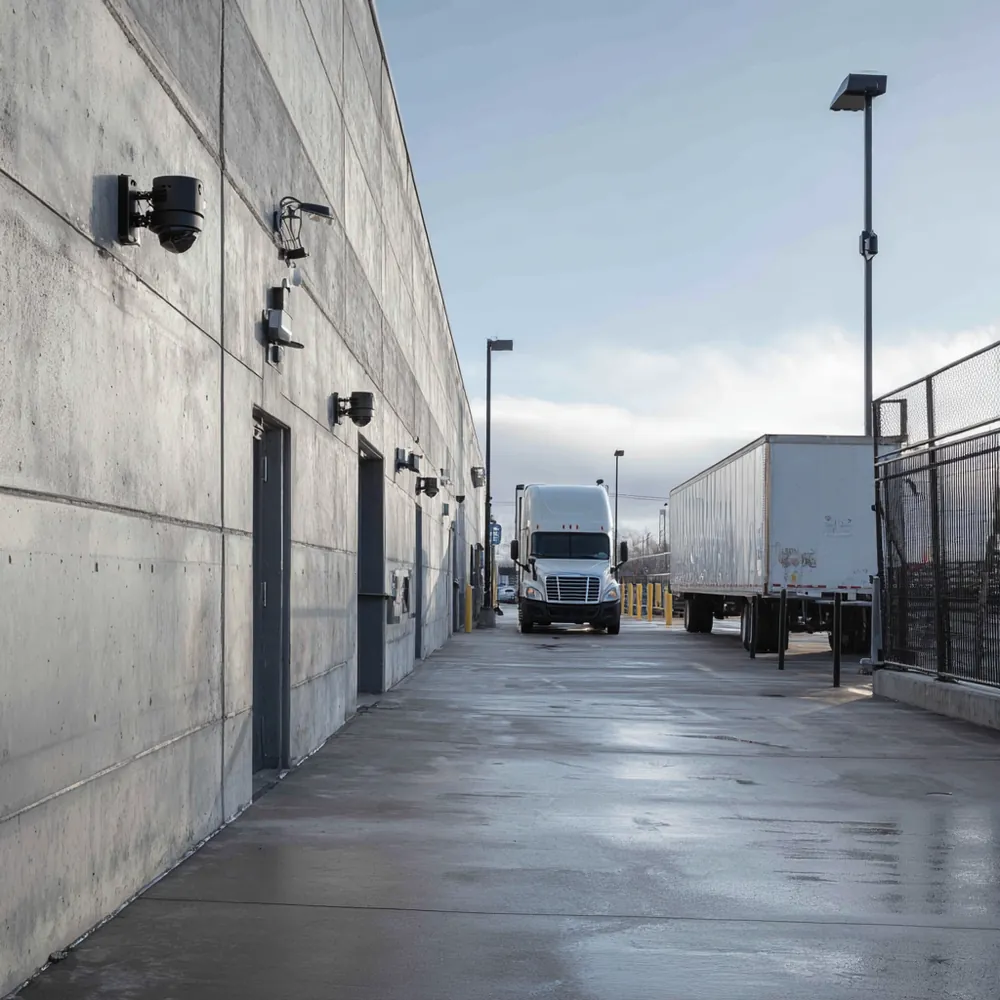
AI‑assisted video analytics is becoming standard in logistics security and operations, and it quietly tilts the playing field even more toward PoE.
AI use cases in warehouses:
- Detecting unsafe behavior at docks and in aisles
- Identifying congestion or stalled flow at loading bays
- Flagging vehicles and people in restricted zones
- Assisting with parcel and pallet tracking via visual metadata
All of these rely on:
- Consistent frame rates
- Stable resolution
- Low packet loss
That is exactly what PoE provides at scale. WiFi performance fluctuates under load and can force cameras to reduce bitrates or drop frames, which directly weakens analytic accuracy.
If your 2026 plan includes AI video analytics for operational optimization, design for PoE as the primary transport layer.
What are the operational benefits of PoE CCTV for logistics security?
PoE CCTV helps logistics security teams protect assets and streamline investigations.
Key benefits:
Faster incident reconstruction
Predictable wired bandwidth preserves frame‑by‑frame clarity so you can track an incident across multiple dock doors or aisles without gaps.Better perimeter and truck‑yard coverage
PoE PTZ and panoramic cameras can run at high bitrates without worrying about RF dead zones, giving clear license plates, trailer IDs and gate events.Stronger evidence for insurance and claims
High‑integrity recordings with stable timestamps reduce disputes, speed claims resolution and protect margins in high‑volume freight operations.
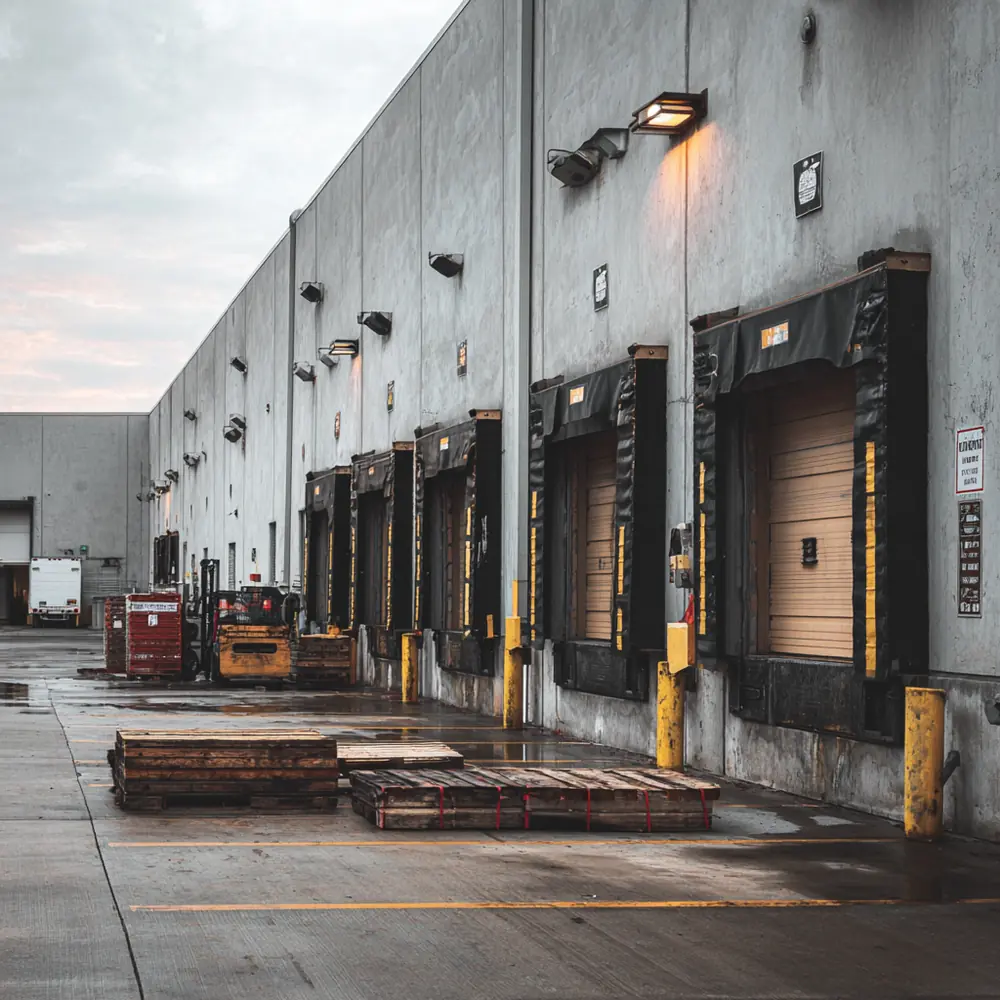
For security leaders comparing PoE IP camera systems for logistics security in 2026, the deciding factors are usually uptime, video integrity and fleet manageability, all of which align strongly with PoE.
Does PoE cost more than WiFi over the full lifecycle?
PoE does require more upfront effort for cabling. However, for permanent warehouses, the lifetime economics favor PoE.
Lifecycle view:
Higher initial cost
Structured cabling, PoE switches and sometimes new racksLower operational cost
- Fewer truck rolls to “fix the WiFi” in aisle 27
- Simpler fleet management from the network rack
- Less time lost chasing intermittent RF issues
Longer usable life
Cable can often outlive one or two generations of cameras, so upgrading to higher resolution or AI‑capable PoE models later stays straightforward.
Permanent logistics facilities typically see PoE as the lower total cost of ownership once you factor in downtime, troubleshooting and the business impact of missed footage.
How should a new buyer design a warehouse CCTV layout around PoE?
For new B2B buyers and distribution partners, start with these simple planning steps.
Map core operational zones
- Dock doors and loading aprons
- Pallet and parcel handling areas
- Aisle pick / pack and high‑bay storage
- Truck yard and gate movement
- Worker safety hotspots and blind corners
Identify which zones are permanent vs temporary
- Permanent = design for PoE from day one
- Temporary or highly uncertain = start with WiFi, pre‑plan later PoE drops
Assign camera types by zone
- Panoramic and multi‑sensor PoE cameras for docks and open areas
- Fixed PoE domes in aisles and freezers
- Rugged PoE bullets and PTZs on external walls and yards
Backbone the network correctly
- Use PoE switches sized for growth
- Trunk them back with sufficient uplink capacity
- Protect core switches and NVRs with UPS and, ideally, generator power
This approach gives you a PoE backbone that supports both current security needs and future operational analytics without having to rip and replace.
Quick FAQs for SEO and real buyers
Q: For optimizing operations in logistics and warehousing with CCTV, should I prioritize resolution or transport (PoE vs WiFi)?
You should prioritize transport first. A 4K camera on unstable WiFi that drops frames is less useful than a slightly lower resolution camera on PoE that records flawlessly during every incident. Once you choose PoE for stability, then tune resolution and storage to suit your needs.
Q: Can I run a mixed PoE and WiFi CCTV system in one warehouse?
Yes. Many successful logistics facilities use PoE for 80–90 percent of cameras, then deploy WiFi in genuinely hard‑to‑cable areas. Just keep your recording platform and camera management unified so operations and security teams do not have to juggle multiple tools.
Q: Are WiFi cameras ever okay as a long‑term solution in warehouses?
They can work in small, low‑density sites with minimal metal racking and limited RF noise. However, as soon as you grow camera count, increase resolution or add more handheld devices, WiFi becomes hard to manage as a permanent CCTV backbone.
Q: How long should I size storage for warehouse CCTV footage?
For logistics operations and incident reconstruction, many sites target 30–90 days of retention, depending on contract terms and claim windows. PoE’s predictable bitrates make long‑retention calculation much more accurate than with variable WiFi links.
Q: What single line should I tell management to justify PoE?
“PoE forms the backbone of warehouse surveillance, giving us consistent video quality, predictable bandwidth and centralized power protection, while WiFi is just a tactical extension where wiring is not yet practical.”
Choosing between PoE and WiFi is really choosing between a stable backbone and a flexible sidekick. In logistics and warehouse operations, PoE is your dependable backbone. WiFi is the helpful backup singer that comes in when the stage is temporary.
Is PoE better than WiFi for warehouse video reliability?
Yes—PoE is more reliable for warehouses because each camera uses a dedicated wired link that avoids RF congestion from scanners, radios, and metal racking. PoE holds resolution and frame rate during peak shifts, while WiFi can suffer packet loss and bitrate drops that create choppy incident footage.
How should I place cameras for dock doors and aisles?
Place fixed cameras over each dock door and loading apron to capture trailer activity and loading accuracy, then add wide-view coverage across pick/pack and high-bay aisles to reduce blind spots. Use a PoE backbone for stable, evidence-grade video where forklifts move fast and lighting varies.
Can I mix PoE and WiFi cameras in one warehouse?
Yes—you can run a mixed system by using PoE as the backbone for most cameras and deploying WiFi only where cabling stays temporarily impractical. Keep recording and management unified so teams investigate incidents across docks, aisles, and yards without switching tools or losing video continuity.